 VapeWholesaleHub
Lavender Ice Flavour Development: From Brief to Production — Plain Language
A lavender ice programme fails in predictable ways: a specification nobody wrote down, a sample nobody retained, and a lead time nobody stress tested. Here is how to close those three gaps before they cost you a container.
What to Fix Before Approving Lavender Ice
A written lavender ice specification should be short enough to read in a minute and precise enough to argue about. If a factory cannot confirm a number in writing, assume the number is whatever is cheapest that week.
When we write a lavender ice specification with a distributor, we fix four things first: the resistance band, the liquid capacity tolerance, the puff count methodology and the packaging master carton. Everything else can flex without changing the customer experience.
| Product category | Disposable |
|---|---|
| Resistance band | 1.2 - 1.4 ohm |
| Capacity tolerance | +/- 5% |
| Puff count method | Declared by capacity |
| Master carton | 100 units |
| Carton weight | 9.9 kg |
| Shelf life | 24 months |
| Storage | 15-25 C, dry, away from direct light |
Market Signals
Expect lavender ice packaging requirements to keep tightening. Designs that leave room for additional labelling age better than tight layouts that need a full reprint to comply.
Freight, Customs and Timing
Model lavender ice freight both ways before choosing a method: cost per unit and cost per week of delay. The second figure is the one that decides whether a cheap option was actually cheap.
How Lavender Ice Batches Are Checked
Most defects in lavender ice are not dramatic. They are loose tolerances, a slightly thin seal, a mouthpiece that clicks. Left alone they turn into leak complaints, which are the single most common reason a retailer drops a line.
The defect rate that matters is the one your customer experiences, not the one the factory reports. Bridge that gap by inspecting the way a customer would open the box, not the way a line worker packs it.
- Keep sealed retained samples from every production batch.
- Ask how the factory measures puff count, then compare like with like.
- Confirm the current customs classification with your own broker.
- Check carton dimensions against your freight quote before confirming.
- Rotate stock by batch code rather than by delivery date.
Modelling a Healthy Margin
Discounting lavender ice to win shelf space tends to reset customer expectations permanently. Volume support in kind, such as display material, usually costs less in the long run.
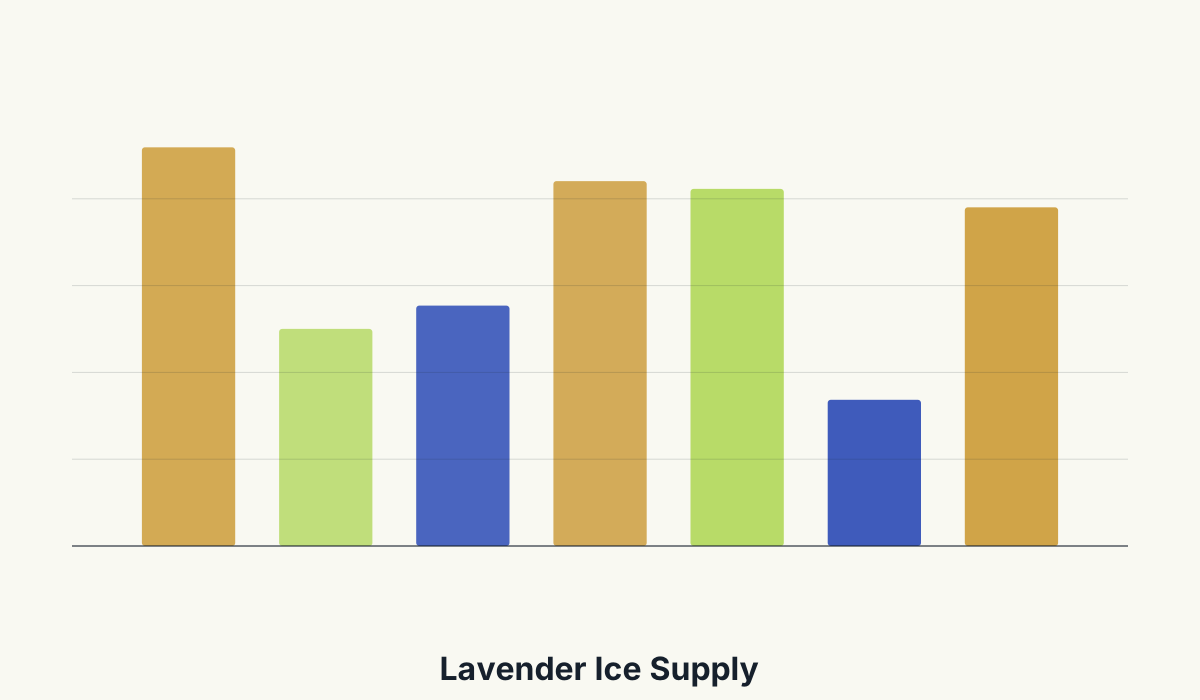
Indicative reference points for planning purposes: entry tier from USD 0.91 per unit at 500 units, mid tier at USD 1.45, and volume tier at USD 1.36 for full container quantities. These figures move with specification, packaging and freight, so treat them as a shape rather than a quote.
Practical Checklist
- Ask how the factory measures puff count, then compare like with like.
- Model landed cost, not ex-works price, when comparing quotes.
- Start with a mixed carton and let your own sell-through decide.
- Agree the tolerance band in writing before approving artwork.
- Rotate stock by batch code rather than by delivery date.
- Keep sealed retained samples from every production batch.
Frequently Asked Questions
Can I visit the production facility?
Yes, and we encourage it for larger programmes. Visits are most useful when you already have a draft specification, because you can then check the specific processes behind the numbers you care about.
What if a batch does not match the sample?
Keep the retained samples from the approval stage. If a delivered batch measurably differs, we compare against the retained set and resolve it against the production record. This is why we insist on sealed retained units from every run.
How are price changes handled on repeat orders?
{K} pricing is reviewed against input costs and volume rather than adjusted casually. Any change is confirmed in writing before the next order is scheduled, with the reason stated so you can judge it yourself.
Do you provide compliance documents?
Every shipment leaves with the documentation set relevant to your market, including batch records and test reports where required. Your local rules still determine what you must file, so confirm those with your broker before import.
What is the usual minimum order for lavender ice?
For a standard production run the minimum is normally one master carton per flavour, though mixed cartons can be arranged for a first order. If you are testing the line, ask about a sample pack first and treat the freight as part of your research budget.
Next Step
Send us your current lavender ice specification even if you are not planning to move suppliers. A second read of a document you use every month is usually worth the ten minutes.
Related Reading
- Negotiating Lavender Ice Contracts With Overseas Factories — the Middle East
- Lavender Ice Nicotine Strength Selection for Mixed Cabinets — Updated for 2026
- Lavender Ice Order Consolidation Across Suppliers — Replenishment Cycles
- Lavender Ice Growing From Pallet to Container — High Volume Buyers
- Lavender Ice Warranty and After Sales: Setting Expectations — First-Time Importers
- Lavender Ice Benchmarking Two Factories Side by Side — Three Price Tiers