 VapeWholesaleHub
Lavender Ice Monthly Review Ritual for Buyers — Entry-Level Price Points
There is no clever trick to buying lavender ice well. There is a short list of things worth checking and a long list of things that distract from them. This page is an attempt at the short list.
Merchandising and Listing Tips
Keep the lavender ice range tidy. A half empty shelf reads as a dying line, and customers interpret it that way faster than any signage can correct.
Use your lavender ice staff training time on the two questions customers actually ask. Anything more detailed gets forgotten by the second shift.
Pricing and Margin
Tiered pricing works best when the tiers match real customer behaviour. Most lavender ice buyers will take the second tier if the step is modest and the third tier only if they can see a genuine reason to hold more stock.
The cheapest lavender ice quote is rarely the cheapest outcome. Add freight, defect handling, delay risk and the staff time spent chasing, then compare again. The ranking often changes.
Indicative reference points for planning purposes: entry tier from USD 1.90 per unit at 2000 units, mid tier at USD 1.73, and volume tier at USD 0.64 for full container quantities. These figures move with specification, packaging and freight, so treat them as a shape rather than a quote.
Where Demand Is Heading
One shift worth planning for: shorter lavender ice reorder cycles with smaller average drops. It favours suppliers with flexible production slots over those who only want large annual commitments.
Inspection Before Dispatch
Incoming inspection for lavender ice is not about opening boxes at random. We weigh a sample of cartons, check batch codes against the production record, run a draw resistance measurement, and log the results so that a complaint three months later can be traced to a specific run.
The cheapest quality control step is a retained sample. Keeping three sealed units from every lavender ice batch costs almost nothing and turns any dispute into a simple comparison instead of an argument over photographs.
- Ask how the factory measures puff count, then compare like with like.
- Confirm the current customs classification with your own broker.
- Model landed cost, not ex-works price, when comparing quotes.
- Plan the switch from air to sea freight before you need it.
- Agree the tolerance band in writing before approving artwork.
Freight, Customs and Timing
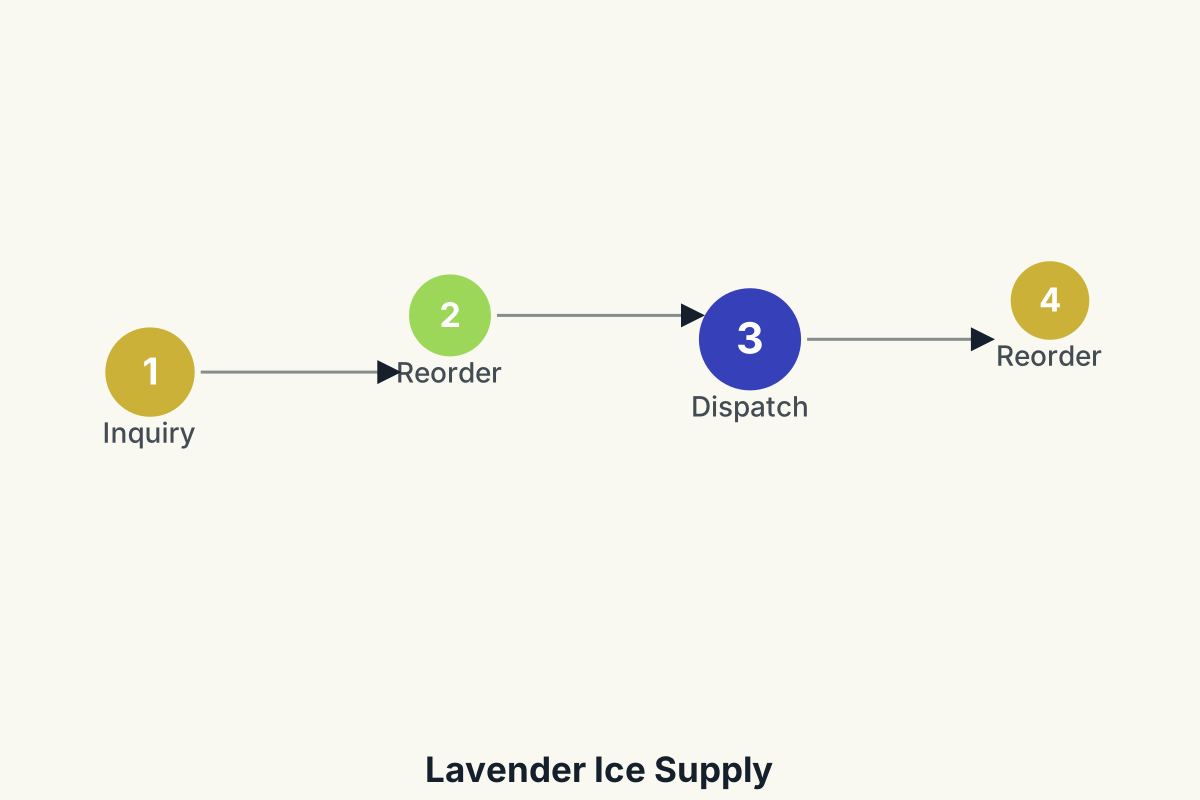
Plan the lavender ice customs paperwork at the same time as the order, not when the goods are on the water. A missing document costs more in demurrage than the entire freight saving from a cheap forwarder.
Model lavender ice freight both ways before choosing a method: cost per unit and cost per week of delay. The second figure is the one that decides whether a cheap option was actually cheap.
Practical Checklist
- Model landed cost, not ex-works price, when comparing quotes.
- Write the complaint threshold into the order terms.
- Ask how the factory measures puff count, then compare like with like.
- Rotate stock by batch code rather than by delivery date.
- Agree the tolerance band in writing before approving artwork.
- Keep sealed retained samples from every production batch.
Frequently Asked Questions
Do you provide compliance documents?
Every shipment leaves with the documentation set relevant to your market, including batch records and test reports where required. Your local rules still determine what you must file, so confirm those with your broker before import.
Do you hold stock for regular customers?
For established programmes we can reserve production slots and, in some cases, hold finished lavender ice stock against a forecast. It removes most of the lead time risk from a reorder and is worth discussing once volumes are stable.
How are price changes handled on repeat orders?
{K} pricing is reviewed against input costs and volume rather than adjusted casually. Any change is confirmed in writing before the next order is scheduled, with the reason stated so you can judge it yourself.
What is the usual minimum order for lavender ice?
For a standard production run the minimum is normally one master carton per flavour, though mixed cartons can be arranged for a first order. If you are testing the line, ask about a sample pack first and treat the freight as part of your research budget.
What if a batch does not match the sample?
Keep the retained samples from the approval stage. If a delivered batch measurably differs, we compare against the retained set and resolve it against the production record. This is why we insist on sealed retained units from every run.
Next Step
Start smaller than feels comfortable, measure honestly, then scale what worked. That sequence has saved more of our customers money than any negotiation tactic we could suggest.
Related Reading
- Lavender Ice Carton Engineering and Freight Density — North America
- Lavender Ice Documentation Pack for Customs Brokers — EU Markets
- Lavender Ice Market Entry Checklist for New Territories — Established Chains
- Lavender Ice Strengths Ladder for a Balanced Cabinet — Busy Buyers
- Lavender Ice First Order Playbook for New Importers — Cross-Border Trade
- Lavender Ice Working With a Local Compliance Partner — High Volume Buyers