 VapeWholesaleHub
Lavender Ice Sell Through Tracking Without Expensive Tools — Highly Regulated Markets
The price difference between two lavender ice quotes is often smaller than the cost of one failed shipment. This overview is written for buyers who would rather understand the failure modes up front than discover them after customs clearance.
Where Demand Is Heading
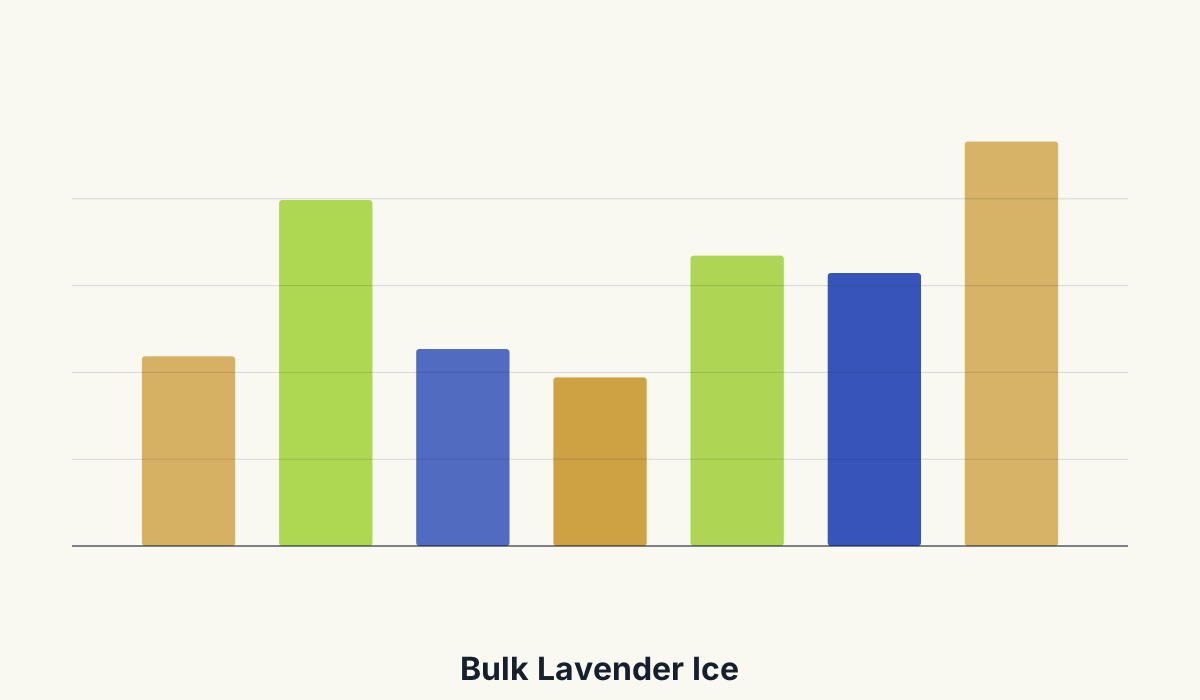
Demand for lavender ice has been steadily rebalancing. The early phase rewarded whoever could ship fastest; the current phase rewards whoever can ship the same thing twice. That shift favours buyers who invest in specification rather than price shopping.
The lavender ice category is consolidating around suppliers who can document what they ship. Buyers who built that requirement into their process early are now finding it much easier to scale.
Getting Lavender Ice to Your Warehouse
Track lavender ice landed cost per unit as a running number, including duty and local delivery. It is the only figure that tells you whether a supplier change actually improved anything.
Model lavender ice freight both ways before choosing a method: cost per unit and cost per week of delay. The second figure is the one that decides whether a cheap option was actually cheap.
Pricing and Margin
Compare lavender ice quotes on the same incoterm. A price that looks better because it excludes a cost you assumed was included is not a saving at all.
Indicative reference points for planning purposes: entry tier from USD 0.89 per unit at 500 units, mid tier at USD 1.29, and volume tier at USD 1.15 for full container quantities. These figures move with specification, packaging and freight, so treat them as a shape rather than a quote.
Reading a Lavender Ice Spec Sheet
When we write a lavender ice specification with a distributor, we fix four things first: the resistance band, the liquid capacity tolerance, the puff count methodology and the packaging master carton. Everything else can flex without changing the customer experience.
| Product category | Accessory |
|---|---|
| Resistance band | 1.0 - 1.2 ohm |
| Capacity tolerance | +/- 2% |
| Puff count method | Machine cycle 2s on / 18s off |
| Master carton | 200 units |
| Carton weight | 10.3 kg |
| Shelf life | 24 months |
| Storage | 15-25 C, dry, away from direct light |
Quality Control in Practice
Keep a photo record of every lavender ice approval sample. Written descriptions age badly; a dated photograph next to a delivered unit settles most arguments in seconds.
- Ask how the factory measures puff count, then compare like with like.
- Agree the tolerance band in writing before approving artwork.
- Start with a mixed carton and let your own sell-through decide.
- Rotate stock by batch code rather than by delivery date.
- Check carton dimensions against your freight quote before confirming.
Practical Checklist
- Model landed cost, not ex-works price, when comparing quotes.
- Keep sealed retained samples from every production batch.
- Start with a mixed carton and let your own sell-through decide.
- Rotate stock by batch code rather than by delivery date.
- Ask how the factory measures puff count, then compare like with like.
- Confirm the current customs classification with your own broker.
Frequently Asked Questions
What if I only need a small first order?
That is normal and sensible. A mixed carton lets you test lavender ice in your own market before committing to a production run, and the specification you approve at that stage carries through to larger orders unchanged.
What happens if my market changes its rules?
Regulations move, and packaging or documentation sometimes has to follow. We keep approved artwork files on hand so that a required change is a reprint rather than a redesign, which keeps the cost and delay down.
How are price changes handled on repeat orders?
{K} pricing is reviewed against input costs and volume rather than adjusted casually. Any change is confirmed in writing before the next order is scheduled, with the reason stated so you can judge it yourself.
Is there support for in-store material?
Yes. Shelf talkers, counter cards and simple planogram suggestions are available for lavender ice ranges that reach a sensible volume. Most retailers find the plain strength and flavour cards do the most work.
How long does a lavender ice order take to arrive?
Production typically takes ten to eighteen working days after artwork approval, and transit depends on the method you choose. Air express is fastest, sea freight is cheapest at volume. We confirm both at quotation so there is no surprise later.
Next Step
Nobody wins when a first order is too large to learn from. Start with a mixed carton, check how it moves in your own market, then scale the lines that earned the shelf space.
Related Reading
- Lavender Ice Returns Data and What It Is Telling You — the Middle East
- Lavender Ice Flavour Development: From Brief to Production — Updated for 2026
- Lavender Ice Supplier Scorecard Template — Entry-Level Price Points
- Lavender Ice Cell and Chip Supply Constraints — Southeast Asia
- Lavender Ice Warranty Claims Workflow — the Middle East
- Lavender Ice vs Standard Alternatives: What Changes for Your Shelf — UK and Ireland