 VapeWholesaleHub
Pricing Lavender Ice for Healthy Retail Margins — Before Your Next Order
Buying lavender ice wholesale is a logistics problem disguised as a product problem. The unit is small, the margin depends on freight density, and the failure mode shows up weeks after delivery. The notes below come from real orders we have shipped.
Positioning Lavender Ice on Your Shelf
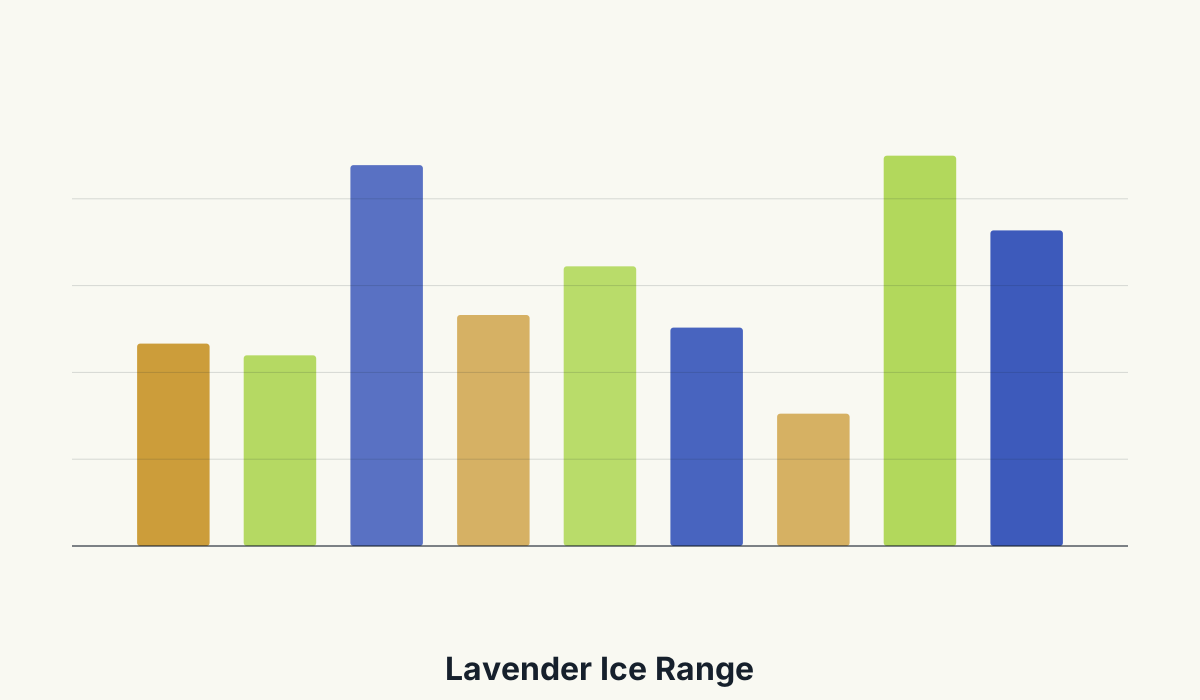
Before anything else, decide which customer you are buying lavender ice for. A convenience counter with limited shelf depth needs a tight range that turns quickly, while a specialist shop can carry a deeper ladder of options and educate buyers into higher ticket lines.
Range decisions for lavender ice should start from shelf space, not from a supplier catalogue. Count the facings you actually have, then decide how many of them this line deserves against what it currently earns.
Inspection Before Dispatch
The defect rate that matters is the one your customer experiences, not the one the factory reports. Bridge that gap by inspecting the way a customer would open the box, not the way a line worker packs it.
Random checks are fine, but weight the sample towards the start and end of a lavender ice production run. Those are where a line is most likely to drift.
- Ask how the factory measures puff count, then compare like with like.
- Plan the switch from air to sea freight before you need it.
- Confirm the current customs classification with your own broker.
- Rotate stock by batch code rather than by delivery date.
- Check carton dimensions against your freight quote before confirming.
Market Signals
Retailers report that lavender ice customers are asking more specific questions than they did two years ago. That favours ranges with clear, simple information over ranges with clever marketing.
Retailers report that lavender ice customers are asking more specific questions than they did two years ago. That favours ranges with clear, simple information over ranges with clever marketing.
The Specification That Matters
When we write a lavender ice specification with a distributor, we fix four things first: the resistance band, the liquid capacity tolerance, the puff count methodology and the packaging master carton. Everything else can flex without changing the customer experience.
Ask any factory for the same lavender ice sample twice, three months apart. If the second sample drifts, the production line is running without statistical control and your reviews will drift with it. Consistency over time is a more useful signal than a single good sample.
| Product category | Closed pod |
|---|---|
| Resistance band | 1.0 - 1.2 ohm |
| Capacity tolerance | +/- 2% |
| Puff count method | Machine cycle 2s on / 18s off |
| Master carton | 200 units |
| Carton weight | 11.3 kg |
| Shelf life | 12 months |
| Storage | 15-25 C, dry, away from direct light |
Logistics That Protect Margin
Ask your forwarder for the lavender ice transit history on your lane, not the advertised schedule. The gap between the two is the buffer you should build into your reorder point.
Freight is the hidden half of lavender ice unit economics. A denser master carton can save more per unit than a hard negotiation on factory price, because the saving repeats on every reorder rather than once.
Practical Checklist
- Confirm the current customs classification with your own broker.
- Check carton dimensions against your freight quote before confirming.
- Model landed cost, not ex-works price, when comparing quotes.
- Plan the switch from air to sea freight before you need it.
- Ask how the factory measures puff count, then compare like with like.
- Write the complaint threshold into the order terms.
Frequently Asked Questions
What is the usual minimum order for lavender ice?
For a standard production run the minimum is normally one master carton per flavour, though mixed cartons can be arranged for a first order. If you are testing the line, ask about a sample pack first and treat the freight as part of your research budget.
Can I visit the production facility?
Yes, and we encourage it for larger programmes. Visits are most useful when you already have a draft specification, because you can then check the specific processes behind the numbers you care about.
Do you hold stock for regular customers?
For established programmes we can reserve production slots and, in some cases, hold finished lavender ice stock against a forecast. It removes most of the lead time risk from a reorder and is worth discussing once volumes are stable.
How are price changes handled on repeat orders?
{K} pricing is reviewed against input costs and volume rather than adjusted casually. Any change is confirmed in writing before the next order is scheduled, with the reason stated so you can judge it yourself.
Can you match an existing product I already sell?
Often yes, provided we can measure it properly. Send a physical sample and we will report back on what can be matched, what will differ slightly, and why. An honest gap is more useful than a vague promise.
Next Step
Whatever you decide, decide it against numbers you can check on arrival. That single discipline removes most of the risk from importing lavender ice.
Related Reading
- Lavender Ice Assortment Depth Versus Breadth — New Distributors
- Lavender Ice Insurance and Cargo Cover Explained — Cross-Border Trade
- Lavender Ice Packaging Refresh Without Losing Recognition — High Volume Buyers
- Lavender Ice Forecasting Without Historical Data — Mixed Cabinets
- Lavender Ice Batch Recall Traceability in Practice — Oceania
- Negotiating Lavender Ice Contracts With Overseas Factories — Before Your Next Order